Rosie Sabich
Presumed InnocentRosie Sabich, the mother of Rusty Sabich, is presented through her son’s recollections as both difficult for him to explain to others and deeply cherished by him. Her story moves from fear and confinement within her marriage to a late period of unexpected public engagement, then to illness and death. In Rusty’s memory, her vulnerability is inseparable from the kindness of those who protected her and from his own struggle to approach her openly.
Identity and Background
Rosie was the sixth daughter of a Jewish union organizer and a woman from Cork. She married Ivan Sabich at twenty-eight, four years older than him. Rusty suspected that Ivan had married her for the savings that enabled him to open a bakery, and he saw little evidence that Rosie had married for love; those judgments belong to his retrospective understanding rather than to any account of her own motives.
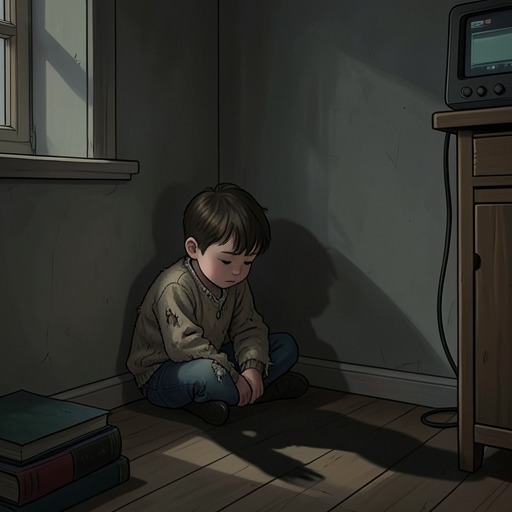
Rusty remembers Rosie as eccentric and emotionally changeable. Her moods could swing from high spirits to brooding, and at times she became agitated. She was also intensely reluctant to leave home: even an afternoon outing required extensive preparation, and when Rusty was eight she began sending him to the market so she could stay inside. Her sisters made a habit of looking after her, in part because her life outside the apartment and bakery was so limited.
Life Beyond the Marriage
Rosie’s circumstances changed when she and Ivan stopped living together but continued to work beside each other in the bakery. Ivan moved in with a widow, Mrs. Bova. Rusty recalls the separation as a kind of liberation for his mother, whose life with Ivan had been dominated by fear. As her interest in the wider world grew, she became a regular caller on listener-participation radio programs, preparing notes and collecting newspaper and magazine clippings for discussions of public controversies.
The contrast was striking to Rusty: a woman who had once struggled to leave her home became a local personality for her outspoken views. He found this new public role difficult to reconcile with the eccentricities and narrow routines he had learned to accept as part of her earlier life. Her transformation did not erase that past, but it showed that the limits Rusty associated with her were not the whole of her character.
Family and Relationships
Rosie’s sisters Flo and Sarah were among her most frequent visitors. They confronted Ivan when he tried to drive them away, and Rusty remembers that he could threaten violence when drunk. The sisters persisted in protecting Rosie and, especially, Rusty: they brought him sweets, took him for haircuts, bought his clothes, and helped supervise his upbringing. Their care was so routine that he did not recognize its purpose or kindness until he was in his twenties. Through them, he gradually understood that his mother’s world was not the only one to which he belonged, even as his devotion to her remained private and hard to explain.
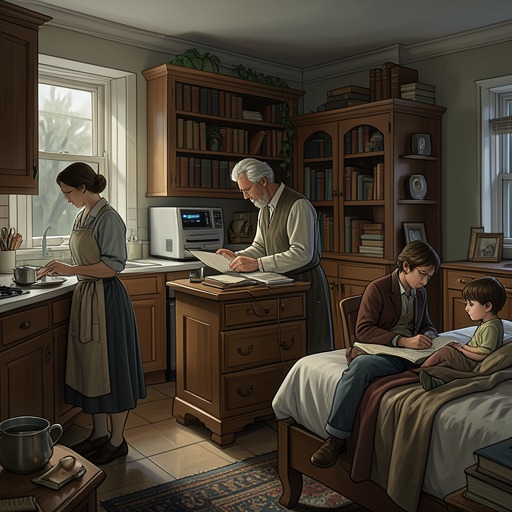
In Rosie’s last months, she stayed with Rusty and Barbara Bernstein in their one-bedroom city apartment. Barbara refused to have Rosie cared for elsewhere and spent much of the time beside her, sitting close to the daybed on which Rosie seldom rose. As Rosie’s illness weakened her, she spoke constantly with Barbara, who held her hand. Rusty watched their closeness from the doorway: he understood Barbara as the daughter Rosie could speak with and Rosie as someone Barbara would not abandon. Their intimacy offered Rosie companionship, while Rusty’s own grief made it harder for him to join them.
Rusty did take Barbara’s place at Rosie’s bedside and told his mother that he loved her. Rosie held his hand and answered with a weak smile, though she seldom spoke. Near the end, Barbara administered Rosie’s Demerol. The remaining syringes were kept among the keepsakes Barbara maintained, alongside antique bobbins, Rosie’s index cards, and the gold-tipped Parker pen she had used to prepare for her radio appearances.
Memory and Narrative Role
Rosie returns in Rusty’s recollection through a dream of her face near the end of her life, followed by memories of her marriage, her sisters’ protection, and Barbara’s care. The movement from dream to remembered detail makes her presence less a source of plot action than a measure of Rusty’s private attachments and grief. Her life also complicates his childhood picture of her: the fearful woman who rarely ventured out became, after separating from Ivan, a recognizable voice in public discussion.
The contrast between Rosie’s dependence on family and her late independence does not resolve into a simple account of recovery. Rusty remembers her as someone he adored but could not readily approach, while Barbara crossed the loneliness between them through sustained care and conversation. The keepsakes Barbara preserved join Rosie’s former routines to the later period in which she found a public voice, leaving her memory present in the household after her death.